Friday Sermon Manuscript of the Grand Imam of Istiqlal Mosque
The Modern Imam: Bridging Religious Diplomacy, Ecotheology, and Faith Leadership
Ma ‘āshiral Muslimīn Rahimakumullāh
In this opportunity, I also would like to reflect on two very important themes that are becoming increasingly important for our shared future. They are religious diplomacy and ecotheology.
Diplomacy is not merely negotiation among governments. It is also the ethical art of building trust, reducing hostility, creating understanding, and finding shared responsibilities among communities that may possess different beliefs. The Qur’an teaches Muslims to conduct dialogue with wisdom: “Invite to the way of your Lord with wisdom (al-hikma) and good instruction (al-maw‘izha al-hasana), and argue with them in the best manner” (QS. al-Nahl [16]: 125).
Similarly, the Qur’an also encourages dialogue with other religious communities around shared moral foundations: “Say: O People of the Book, come to a common word between us and you” (Qur’an Āl ‘Imrān [3]: 64).
قُلۡ يٰۤـاَهۡلَ الۡكِتٰبِ تَعَالَوۡا اِلٰى كَلِمَةٍ سَوَآءٍۢ بَيۡنَـنَا وَبَيۡنَكُمۡ
The concept of a “kalima sāwā’” (common word) is especially relevant today. This “common word” today may include peace, environmental protection, humanitarian assistance, poverty reduction, disaster response, youth welfare, and the prevention of violence and drug abuse. This is another dimension of transcendental unity of religion, in addition to the same thing in religious studies, especially by Schuon. This clearly leads us to strengthen the centripetal power of religion to unite the people and make peace, not the centrifugal one to disunite and create conflict among people. In this sense, religious language as expressed above is very powerful in diplomacy to support and strengthen legal-formal diplomacy.
Nevertheless, religious communities do not have to agree on every theological doctrine in order to cooperate. We may differ concerning theology, scripture, ritual, and religious authority. Taking a side on spiritually connotative (sufistic) interpretation of the Qur’an, these differences may find justification from what Ya‘qūb AS (Jacob) advised his children, “O my sons, do not enter from one gate but enter from different gates,” as recorded in the Holy Qur’an QS. Yūsuf []: 67).
وَقَالَ يٰبَنِيَّ لَا تَدْخُلُوْا مِنْۢ بَابٍ وَّاحِدٍ وَّادْخُلُوْا مِنْ اَبْوَابٍ مُّتَفَرِّقَةٍۗ
Yet, regardless these differences, we still have to find common ground in protecting human dignity, reducing poverty, preventing violence, defending vulnerable communities, and protecting the environment. Religious diplomacy, therefore, is not the weakening of religious identity. Thus, religion is the principle of identity. It is the expression of religious maturity. A confident Believer can remain committed to faith while treating others with justice, courtesy, and compassion.
This surely brings us to ecotheology which asks us to understand the environment not merely as a scientific or economic issue, but as a theological and moral question. In Islam, the Earth belongs ultimately to Allah. Human beings are entrusted with responsibility over creation, not absolute ownership of it. Allah says:
وَهُوَ الَّذِيْ جَعَلَكُمْ خَلٰۤىِٕفَ الْاَرْضِ
“It is He who has made you successors upon the earth” (QS. al-An‘ām [6]: 165).
Islam also rejects isrāf, excessive consumption. The Prophet Muhammad ﷺ reinforced these environmental ethics in many teachings. He said:
إِنَّ الدُّنْيَا حُلْوَةٌ خَضِرَةٌ وَإِنَّ اللَّهَ مُسْتَخْلِفُكُمْ فِيهَا فَيَنْظُرُ كَيْفَ تَعْمَلُونَ
“The world is sweet and green, and Allah has made you successors over it, and He observes how you act” (Ṣaḥīḥ Muslim, No. 2742).
Planting crops as one example, is a great benefit for human being and other creatures. This teaching expands the idea of charity beyond direct human assistance. Feeding animals and supporting ecological life can also become ṣadaqa. The Prophet ﷺ said: “There is no Muslim who plants a tree or sows a crop from which a person, bird, or animal eats, except that it is counted for him as charity” (Ṣaḥīḥ al-Bukhārī, No. 2320; Ṣaḥīḥ Muslim, No. 1553):
مَا مِنْ مُسْلِمٍ يَغْرِسُ غَرْسًا، أَوْ يَزْرَعُ زَرْعًا، فَيَأْكُلُ مِنْهُ طَيْرٌ أَوْ إِنْسَانٌ أَوْ بَهِيمَةٌ، إِلاَّ كَانَ لَهُ بِهِ صَدَقَةٌ
The spiritual message is profound. The environmental responsibility is valuable even when immediate benefit is uncertain. Planting is an act of hope, responsibility, and faith. With ecotheology, we come to a conclusion that religion plants awareness of silaturrahhim or spiritual connection between we human being as microcosmos and God and the universe as macrocosmos. For this reason, religious diplomacy in the twenty-first century should include ecological diplomacy.
In another dimension, climate change, polluted oceans, forest fires, water scarcity, and biodiversity loss do not respect national or religious boundaries. Muslims, Christians, Hindus, Buddhists, Jews, Indigenous communities, and people of other traditions inhabit the same planet. This is the absolutely the critical point that humanity is only one. Allah SWT created human being in absolutely the same value of humanity. Therefore, Allah clearly says: wa laqad karramnā banī Ādam, that Allah honours all children of Adam, all human beings unexceptionally. Allah would not say: wa-laqad karramnā al-muslimīn. Allah would not say that We honour Muslims only. Similarly, Allah SWT also says inna-mā al-mu’minūn ikhwa, that all Believers, regardless their background of faith, are brothers and sisters. Allah would not say, inna-mā al-muslimūn ikhwa, that only Muslims are borthers and sisters, but all Believers are borthers and sisters.
Faith communities possess enormous moral resources. Mosques, churches, temples, monasteries, pesantren, schools, universities, and religious organisations reach millions of people. Imagine if these institutions became centres of ecological transformation: conserving water, reducing waste, planting trees, using clean energy, teaching environmental ethics, and working together across religious boundaries. Then ecotheology would no longer remain merely a concept. It would become a civilisation-building project.
Ma‘āshiral Muslimīn Rahimakumullāh
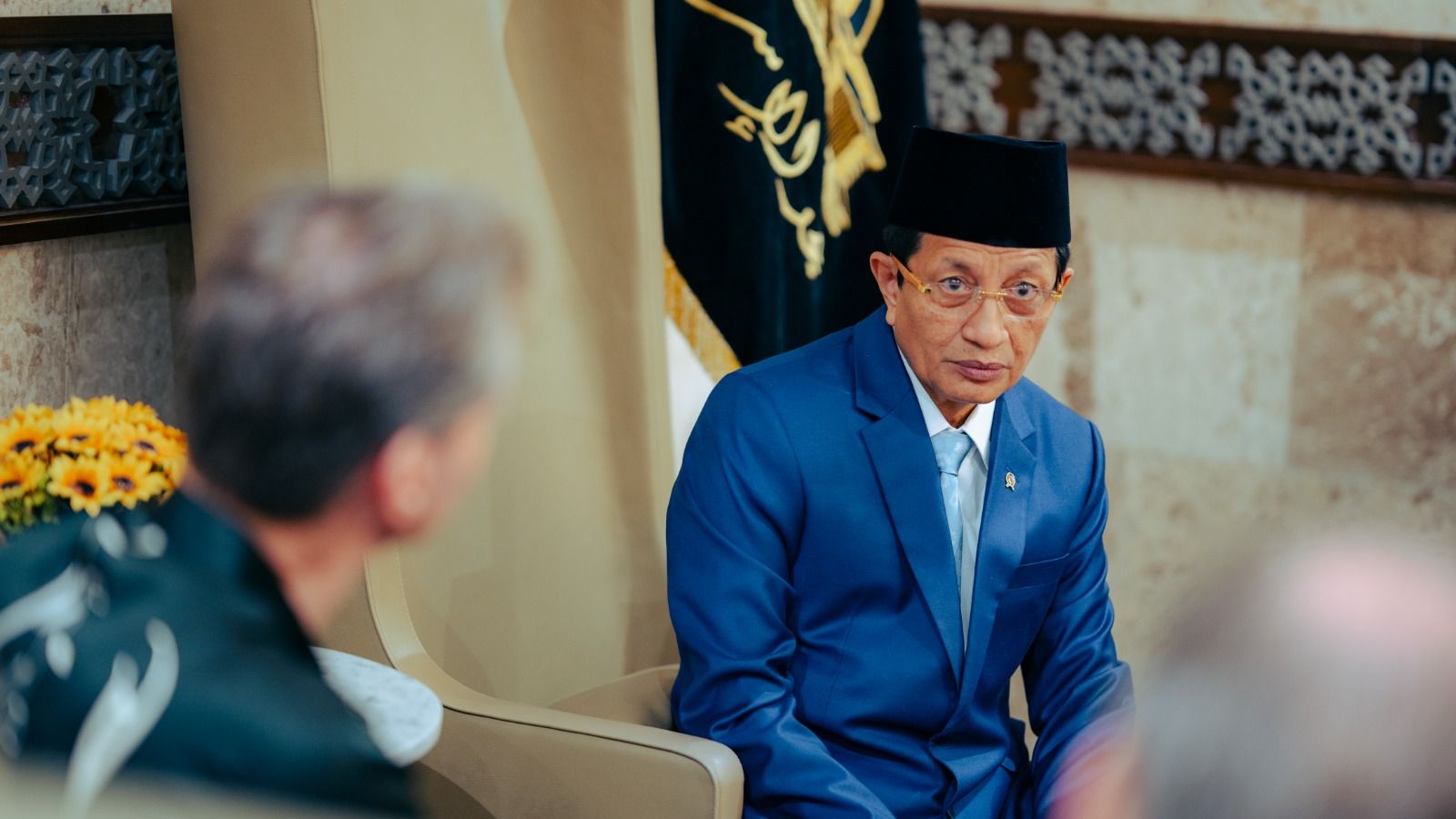
The role of the mosque imam is changing and expanding. Traditionally, the imam has been understood primarily as the person who leads prayer, teaches the Qur’an, delivers sermons, and guides the moral life of the Muslim community. These functions remain essential. Yet in today’s interconnected and often divided world, the imam is increasingly called to become something more, namely a bridge-builder, peace educator, community diplomat, and representative of Islam in the wider public sphere.
The imam is uniquely positioned to encourage this process. He speaks regularly to the community, understands local concerns, possesses religious legitimacy, and often becomes the first person people approach during family crises, social conflict, or moral confusion. Because of this trust, the imam can help reduce religious prejudice before it develops into hostility. An imam who practises ḥikmah does not weaken his faith. Rather, he demonstrates maturity in presenting Islam with dignity and respect.
The role of the imam can therefore extend beyond the walls of the mosque. He can engage schools, universities, government institutions, diplomatic forums, media, and civil-society organizations. The Prophet Muhammad ﷺ taught that a Muslim is one from whose tongue and hand other people are safe. This moral principle should also guide public religious communication. The mosque itself can become a centre of religious diplomacy. It can host interfaith discussions, humanitarian cooperation, environmental programs, youth activities, and educational visits.
The mosque itself can become a centre of religious diplomacy. It can host interfaith discussions, humanitarian cooperation, environmental programs, youth activities, and educational visits. Mosque should be a melting pot to unite people of different faith, even a home for humanity. In this way, the mosque becomes not only a place of worship, or the meeting point of God and His servants, but also a place where Islamic mercy is made visible in society. In addition, as we learn from the Prophet Muhammad, we should extend the function of mosque as place of people empowerment.
The imam of the future must remain firmly rooted in the Qur’an and Sunnah, while also understanding society, media, conflict resolution, international affairs, and cultural diversity. His authority should not be limited to ritual leadership. It should also contribute to social peace. An imam who builds bridges does not compromise Islam. On the contrary, he helps demonstrate Islam as raḥmatan lil-ʿālamīn, a mercy to all creation.
Muh. Asdar
Dapatkan informasi seputar masjid istiqlal
Ikuti channel kami di WhatsApp untuk update kegiatan, pengumuman, dan informasi penting.